Class 3 Weapons: What They Are, What It Takes to Own One, and What They’re Like to Shoot
“Class 3” is one of the most used and most misunderstood terms in the firearms world. It gets dropped constantly in gun shop conversations and YouTube comment sections. Usually, it’s by someone asking about class 3 weapons or how to buy them. Nearly every time, it’s used incorrectly.
This guide clears up what “class 3” actually means. It also walks you through the NFA categories that people are really referring to and breaks down the ownership process and costs.
In addition to that, it covers something most guides leave out entirely: what these firearms are actually like to shoot.
What Is a Class 3 Weapon?
Strictly speaking, there’s no such thing as a “class 3 weapon.” The term “class 3” refers to a Special Occupational Taxpayer (SOT) classification for Federal Firearms License (FFL) holders.
This means a Class 3 SOT is actually a dealer authorized to sell certain regulated items. The firearms themselves aren’t “class 3” anything.
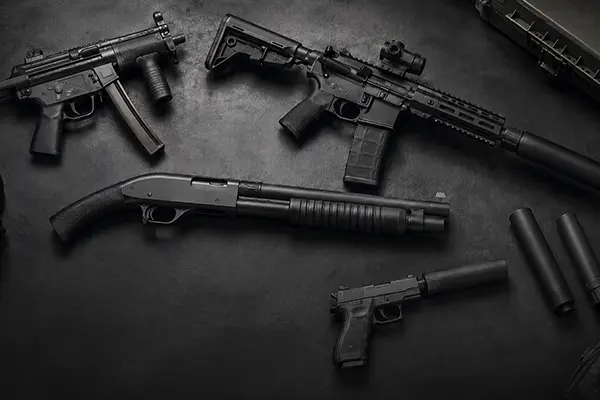
What people are trying to say when they talk about “class 3” weapons are actually firearms and devices regulated under the National Firearms Act of 1934 (NFA). These are the items Class 3 SOTs are authorized to sell!
The NFA created a registry and tax framework for certain types of weapons that the federal government considered especially dangerous or unusual. Those categories are:
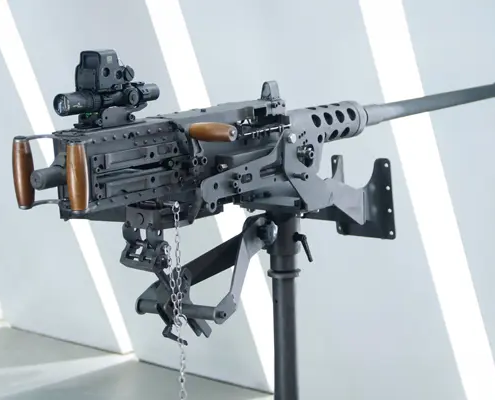
- Machine guns – Firearms capable of firing more than one round per trigger pull. This includes fully automatic rifles, submachine guns, and any device (like a registered auto sear or lightning link) that converts a semi-automatic firearm to full-auto.
- Short-barreled rifles (SBRs) – Rifles with a barrel under 16 inches or an overall length under 26 inches.
- Short-barreled shotguns (SBSs) – Shotguns with a barrel under 18 inches or overall length under 26 inches.
- Suppressors (silencers) – Devices designed to reduce the sound of a firearm’s discharge.
- Destructive devices – Grenades, rockets, missiles, and firearms with a bore diameter over .50 caliber (with some sporting exceptions for shotguns).
- Any Other Weapons (AOWs) – A catch-all category covering concealable firearms that don’t fit the other categories, e.g. pen guns, cane guns, and certain smooth-bore pistols.
Each of these requires registration under the NFA and a transfer process through the ATF. Note that the specifics of that process changed significantly in 2026.
What It Takes to Get a Class 3 License (And Why You Probably Don’t Need One)
This is where the confusion runs deepest. Individual buyers don’t need a “class 3 license” to own NFA items.
The actual “Class 3 license” (the SOT) is for dealers, not individual buyers. If you want to become a dealer authorized to sell NFA items, you need a Federal Firearms License (Type 01, 02, or 07) plus the Class 3 SOT tax, which typically runs $500 per year. That’s a business decision, not a hobby one.
For individual buyers trying to get an NFA item, you only need to go through the ATF’s transfer and registration process. That’s a one-time application per item, not a license.
The process works like this:
- You find an NFA item at a dealer who holds a Class 3 SOT.
- You pay for the item.
- Your dealer submits an ATF Form 4 on your behalf. The form includes your personal information, fingerprints, a passport-style photo, and details about the firearm.
- A copy goes to your local Chief Law Enforcement Officer for notification (not approval).
- You wait for the ATF to run a background check and approve the transfer.
How Long Do NFA Transfers Take?
How long does it take to get an NFA item transfer approved? Historically, the answer was “months to over a year.” By 2026, the picture had changed dramatically.
Electronic Form 4 submissions through the ATF’s eForms system are now being approved in days, not months. As of mid-2026, individual eForm 4 approvals averaged under two weeks, with some clearing in under a week.
Trust submissions take slightly longer if multiple responsible persons require separate background checks. Paper submissions still take months and there’s little reason to use them anymore.
The 2026 Change to NFA Transfer Tax
Under the One Big Beautiful Bill Act (signed July 4, 2025), the $200 federal tax on NFA transfers dropped to zero for suppressors, SBRs, SBSs, and AOWs effective January 1, 2026.
Machine guns and destructive devices still carry the $200 tax. Still, this single change has made suppressor and SBR ownership dramatically more accessible.
Finding a Class 3 Dealer
NFA items must transfer through a dealer who holds the Class 3 SOT. Not every gun shop has one. Finding a good NFA dealer matters because they’re the ones submitting your paperwork, and errors on the Form 4 are the most common cause of delays.
Look for dealers who handle NFA transfers regularly, not shops that do one or two a year as a side service. Experienced NFA dealers know how to file clean eForms and can walk you through the process to further minimize the chance of error.
What’s more, the best dealers often maintain relationships with distributors that give them access to inventory that doesn’t hit the open market.
For buyers looking to fund an NFA purchase by selling existing firearms, online FFLs can simplify the other side of the equation. Cash for Arms buys entire gun collections, for example, including NFA items.
This could be a practical route if you’re consolidating a safe full of rifles and handguns into a single high-value NFA item. Selling a collection piecemeal through forums takes weeks; a single transaction through a service like that takes days.
The Cost of Owning Class 3 Weapons
The NFA process is now cheaper and faster than ever, but the items themselves range from surprisingly affordable to genuinely expensive.
Suppressors are the most accessible NFA category. Quality cans range from $300 to $1,500 depending on caliber and manufacturer. With the tax stamp now at zero, the total cost is just the suppressor itself plus any dealer transfer fee. This is the entry point for most people’s first NFA item.
Short-barreled rifles are similarly accessible. The firearm itself costs whatever the base rifle costs. If you’re building from scratch, file an ATF Form 1 (to manufacture an NFA item, also now $0 tax), get your approval, and assemble your SBR. If you’re buying a factory SBR, it transfers on a Form 4 through your dealer.
Machine guns are where it gets serious. Under the Hughes Amendment to the Firearm Owners Protection Act of 1986, no new machine guns can be manufactured for civilian sale. Only machine guns registered before May 19, 1986 are transferable to individual buyers.
Fixed supply plus growing demand has driven prices steadily upward over the past four decades. Here are some estimates for popular transferable machine guns in the current market:
- MAC-10 / MAC-11: $8,000-$14,000. The entry point. High rate of fire, compact, and widely available on the transferable market.
- Full-size Uzi: $15,000-$19,000. A genuinely pleasant gun to shoot on full auto. The heavy bolt and relatively slow cyclic rate (around 600 RPM) make it controllable and economical on ammunition.
- M16 registered lowers: $20,000-$45,000 depending on manufacturer. The lower is the registered machine gun and everything else is swappable. A registered Colt lower can host a completely modern upper with current-production parts.
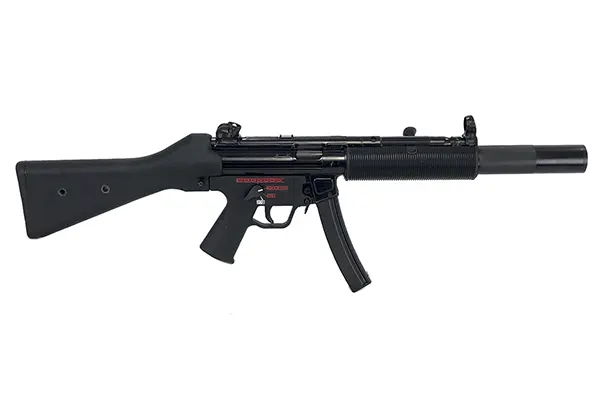
- HK MP5 and rare platforms: Often $40,000 and up, with some examples reaching six figures.
Machine gun prices have appreciated steadily since 1986, and the fixed supply suggests this trend is likely to continue. Many collectors treat them as alternative investments alongside their recreational value.
What Class 3 Weapons Are Actually Like to Shoot
Most guides stop at the legal and financial details. They tell you how to buy NFA items but not what the experience is actually like.
Having put these firearms into thousands of hands, we can fill that gap!
What’s It Like to Shoot a Machine Gun?
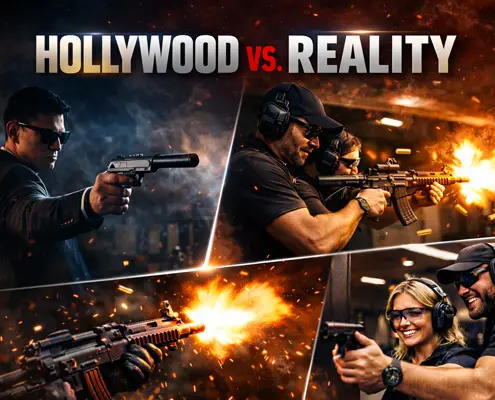
Full-auto fire is nothing like what movies suggest. The first thing most people notice is how fast the magazine empties. A MAC-10 in .45 ACP will burn through a 30-round magazine in under two seconds at 1,000+ RPM. Controllability is a real challenge. Without proper technique, muzzle rise walks the barrel off target after the first few rounds.
An M16 or M4-pattern rifle on full auto is a different experience entirely. The 5.56 NATO round produces moderate recoil, and the rifle’s weight helps manage it.
Short, controlled bursts of 2-3 rounds are where the platform shines. Most shooters find they can keep groups on a torso-sized target at 25 yards fairly quickly if they restrict themselves to this.
What’s It Like to Shoot with a Silencer?
Suppressed shooting surprises people too because many seem to expect it’ll sound like it does in most movies. It doesn’t. A suppressed 9mm pistol still makes a very audible sound that’ll turn heads.
The sharp crack is just replaced with a deeper, more muffled tone that significantly reduces the risk of hearing damage. For rifle calibers, a suppressor reduces the blast and concussion significantly but doesn’t even eliminate the supersonic crack of the bullet itself.
That’s because the practical benefit isn’t really stealth. It’s more about hearing protection and reduced recoil.
What’s It Like to Shoot an SBR?
SBRs handle differently from full-length rifles. Chopping a barrel to 10.3 inches (the Mk18 configuration) or shorter makes the weapon faster in transitions and more maneuverable in tight spaces… but it comes with increased muzzle blast, flash, and concussion.
That’s why pairing an SBR with a suppressor is so popular: compact handling with manageable blast.
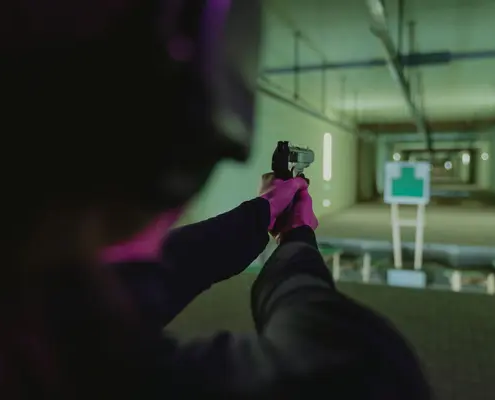
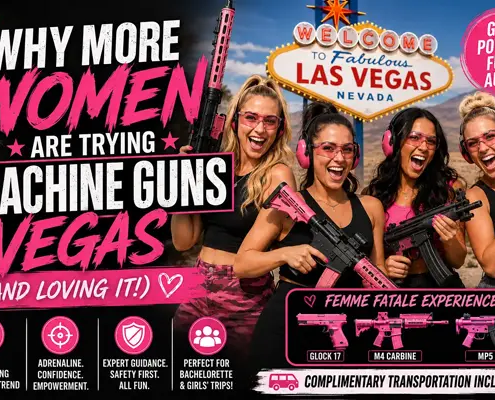
Remember: for anyone curious about these firearms but not ready to commit to ownership, shooting experiences like ours offer a way to try them first.
The hands-on time can help you decide which platform is worth the investment before you spend thousands on a transferable machine gun or build out an SBR.
The Bottom Line
“Class 3” may be the wrong term, but the category of firearms it refers to has never been more accessible. Tax stamps at zero for most NFA items, eForm approvals measured in days instead of months, and a robust market for everything from suppressors to machine guns.
Whether you’re buying your first can or planning a long-term NFA collection, the framework is straightforward once you understand how it works.