How to Build a Consistent Handgun Training Routine for Better Accuracy
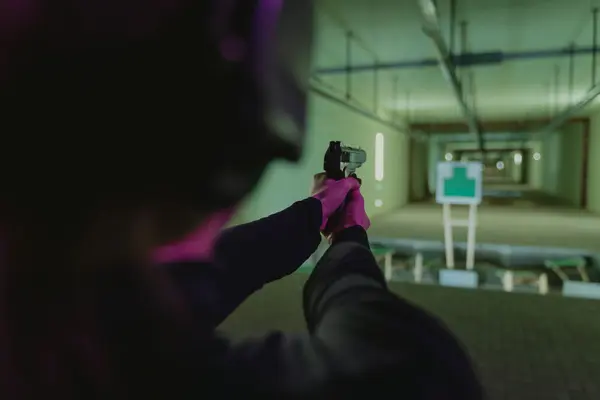
Most shooters don’t lack motivation — they lack structure. Showing up to the range without a repeatable plan means progress stays inconsistent, no matter how many rounds are fired.
A well-built handgun training routine brings together four core elements: dry-fire training, live fire sessions, fundamentals work, and progress tracking. Each one plays a distinct role. Dry-fire builds muscle memory without the cost of ammunition. Live fire tests what practice has developed. Fundamentals work keeps grip, trigger control, sight alignment, and shot placement sharp across every session.
The key insight is that better accuracy comes from repeatable habits, not random drills. When a shooter returns to the same structure week after week, small improvements compound over time. Rotating deliberately through accuracy drills, grip mechanics, and trigger control exercises, rather than picking drills at random, is what separates a training routine from just going to the range.
What a Good Handgun Routine Should Include
A solid handgun training routine blends four core elements: fundamentals work, dry-fire training, live fire sessions, and progress tracking. Fundamentals work keeps grip, trigger control, sight alignment, and shot placement sharp. Dry-fire builds the movement patterns that make those fundamentals automatic. Live fire tests whether those patterns hold up under real conditions. Progress tracking ensures the routine evolves based on results rather than guesswork.
Better accuracy comes from repeatable sessions, not random drills. Rotating deliberately through these elements, week after week, is what turns range time into measurable improvement.
Build the Routine Around Core Accuracy Skills
A strong routine is only as good as the skills it prioritizes. Before thinking about scheduling or drill selection, it helps to understand which mechanics actually drive accuracy and how to pair each one with the right practice.
Start with the Fundamentals That Miss Less
Every effective handgun training routine centers on the same five mechanics: grip, stance, sight alignment, trigger control, and recoil management. These are not warm-up exercises; they are the foundation that every other skill builds on.
Grip and stance determine how stable the platform is before the shot breaks. Sight alignment dictates where the round lands. Trigger control prevents the shooter from disturbing that alignment at the moment of firing. Recoil management sets up the next shot quickly and cleanly.
Skipping any of these in favor of more exciting drills is one of the most common reasons accuracy stalls.
Choose Drills That Match Each Skill
Pairing each fundamental with the right drill keeps training purposeful. The Dot Torture Drill targets precision and trigger control by forcing accurate shots on small targets at close range. For shooters working toward a precision handgun shooting experience, it rewards patience over speed.
The Bill Drill connects recoil management with speed and accuracy together, placing six rounds on a single target as fast as shots can be placed without sacrificing placement.
Controlled accuracy drills, run at deliberate pacing, reinforce sight alignment and trigger control before introducing any time pressure. Stocking enough bulk 9mm ammo for the range ensures these accuracy drills get the repetitions they need without cutting sessions short.
Balance Dry Fire and Live Fire Each Week
One of the most practical questions in routine-building is how to divide practice between home and the range. The answer comes down to what each environment can actually teach.
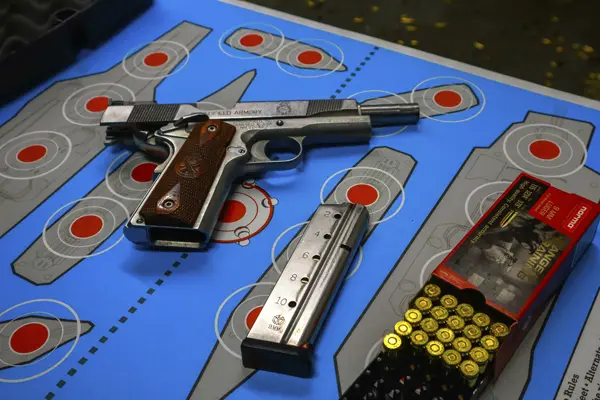
What to Practice at Home
Dry-fire training handles the repetition-heavy skills that don’t require ammunition to develop. Trigger control, sight alignment, grip, and holster draw work all respond well to home practice because they rely on movement patterns rather than real-time feedback from a fired round.
Muscle memory research supports what experienced shooters already know: consistent repetition of a movement is what makes it automatic under pressure. A realistic home session might include 10 minutes of draw-to-dry-fire repetitions, grip resets, and slow trigger presses while holding a clean sight picture.
What to Save for the Range
Live fire confirms what dry-fire builds. Shot placement, recoil management, and timed performance all require real rounds to evaluate accurately, as a home environment simply cannot replicate those conditions.
Range sessions should test whether the habits developed at home hold up when noise, recoil, and real timing enter the picture. The pistol favored by elite tactical units performs under those same conditions for a reason. A simple weekly split for concealed carry practice: three to four dry-fire sessions at home and one live fire session at the range.
Use a Simple Schedule You Can Repeat
A Weekly Plan for Most Shooters
A realistic weekly structure for most shooters looks like this: two to three dry-fire sessions at home focused on fundamentals, one mid-week accuracy drill session, and one full live fire range day. A sample rotation might look like:
Monday/Wednesday: Dry-fire, covering trigger control, grip resets, and draw repetitions
Thursday: Accuracy drills, such as the Dot Torture or Baer Standard Drill at close range
Saturday: Live fire, including the Mozambique Drill, Bill Drill, and timed defensive shooting sequences
This rhythm keeps fundamentals sharp without overwhelming a schedule.
How to Scale Difficulty Without Losing Form
Progression works best when only one variable changes at a time. Once a shooter consistently passes the Baer Standard Drill at seven yards, the next step is extending distance, not also adding a timer.
The same applies to the Phase 5 Drill and any speed and accuracy work. Adding time pressure before shot placement is reliable tends to build bad habits faster than good ones. A simple rule: when a drill feels controlled and repeatable at the current standard, raise one demand, whether that’s distance, target size, or par time, and rebuild consistency there before moving further.
Track Progress So Accuracy Actually Improves
Knowing what to practice matters less if there’s no way to tell whether it’s working. A shot timer, paper targets, and a basic training log are the three tools that turn repeated sessions into measurable progress.
After each range visit, record group size, shot placement patterns, and any timed scores from drills run that day. These numbers reveal what’s actually improving and what still needs work.
Set benchmarks tied to both consistency and precision, not just speed. Once a shooter hits those benchmarks reliably across multiple sessions, that’s the signal to raise the standard. Revisiting the log every few weeks keeps the routine evolving based on results, not guesswork, and ensures that muscle memory is being built in the right direction.
Consistency Matters More Than Complexity
Fundamentals, repetition, and tracking consistently outperform constantly rotating drills. Trigger control, dry-fire training, and structured accuracy drills only compound into real improvement when a shooter returns to the same routine week after week.
The place to start is small: pick two or three drills, build a simple weekly schedule, and track results across sessions. Complexity can come later. Consistency is what actually moves accuracy forward.